


Such support can help link emission-reduction projects with green financing opportunities,
Jakarta (ANTARA) – The National Development Planning Ministry (Bappenas) has stepped up cooperation with the World Resources Institute (WRI) to accelerate the integration of climate targets into national and regional development planning.
“Low-carbon and climate-resilient development is an important part of Indonesia’s long-term development agenda,” Deputy National Development Planning Minister Febrian Alphyanto Ruddyard said in a statement on Friday.
The cooperation aims to strengthen regional governments’ capacity and encourage the preparation of emission-reduction projects that are ready for funding and investment.
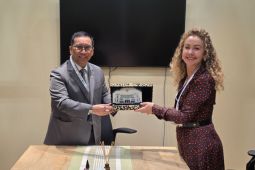
Ruddyard made the remarks during a bilateral meeting with WRI Managing Director of Global Presence and National Action Adriana Lobo on the sidelines of the 31st United Nations Climate Change Conference (COP31) in Antalya, Türkiye.
He said the commitment was reflected in the 2025–2045 National Long-Term Development Plan and the 2025–2029 National Medium-Term Development Plan, both of which identify green economy transformation as a national development priority.
One challenge, he noted, is aligning national climate targets with regional development plans and monitoring their implementation through AKSARA, the Low-Carbon and Climate-Resilient Development Action Planning and Monitoring System.
Given differences in institutional and technical capacity, regional governments need support in translating these targets into development programs and monitoring their progress, he said.
Ruddyard also highlighted the challenge of turning climate commitments into projects capable of attracting financing. WRI could help with project preparation, feasibility studies, investment needs assessments, and the development of a credible project portfolio.
“Such support can help link emission-reduction projects with green financing opportunities, including by considering the role of carbon pricing within the carbon economic value framework,” he said.
Bappenas and WRI have cooperated since the development of the Low Carbon Development Initiative in 2017. Their collaboration has covered low-carbon development analysis, climate modeling, green economy strategy formulation, and the preparation of low-carbon development plans in several regions.
The cooperation was further strengthened through a memorandum of understanding signed in August 2024.
Looking ahead, both sides see opportunities to expand their collaboration through enhanced green economy modeling, support for the climate change modeling team, and capacity building for regional governments.
Related news: Indonesia identifies 191 green jobs, targets 15.3 million by 2045
Translator: Alatas, Kenzu
Editor: M Razi Rahman
Copyright © ANTARA 2026