


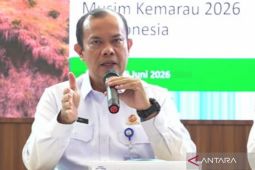
Jakarta (ANTARA) – The Meteorology, Climatology, and Geophysics Agency (BMKG) stressed the need to adjust planting patterns in El Niño-affected areas to reduce the risk of crop failure caused by below-normal rainfall during the dry season.
BMKG Head Teuku Faisal Fathani informed that areas south of the equator, which are at greater risk of El Niño impacts, require special attention, such as East Nusa Tenggara (NTT), West Nusa Tenggara (NTB), Bali, Java, southern Sumatra, and southern Papua.
“We must adjust the planting period. The planting period may need to be brought forward so that when the crops are nearing harvest, the dry season will not affect yields,” he said on Tuesday.
In addition to regulating planting times, the agency is also encouraging the use of crop varieties suited to drier conditions during the El Niño period.
Fathani said BMKG continues to assist agricultural agencies and farmers through its Climate Field School (Sekolah Lapang Iklim) program to improve their understanding of climate-adaptive farming practices.
He added that agricultural extension workers are also involved in the program to strengthen the food sector’s preparedness for changing climate conditions.
While the impacts of El Niño will differ from one region to another, Fathani explained that its effects will still be influenced by atmospheric dynamics and sea surface temperatures.
Meanwhile, BMKG’s Deputy for Weather Modification, Tri Handoko Seto, said that reduced rainfall due to El Niño could also impact the water supply to reservoirs for agriculture, raw water, and hydroelectric power plants (PLTA).
To anticipate this situation, the authority is conducting weather modification operations to increase water supply to several reservoirs.
Weather modification operations are also being carried out as an effort to mitigate forest and land fires by maintaining the humidity of peat areas to prevent them from igniting easily.
BMKG said El Niño, which began in June 2026, has entered a strong phase and could intensify further. However, it stressed that this does not mean Indonesia will experience dry conditions throughout the El Niño period.
BMKG forecasts low to very low rainfall from August to September 2026, increasing the risk of drought in several regions.
The rainy season is expected to begin in mid-October, gradually weakening El Niño’s influence on Indonesia’s rainfall patterns.
Related news: Indonesia gears up as stronger El Nio looms: BMKG
Related news: Indonesia sets four priority response clusters to address El Nio
Related news: Indonesia tackles 294 drought hotspots to protect food security
Translator: Shofi Ayudiana, Resinta Sulistiyandari
Editor: Azis Kurmala
Copyright © ANTARA 2026