


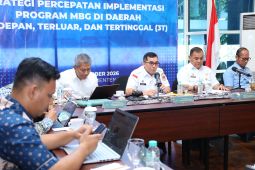
Jakarta (ANTARA) – Indonesia’s National Border Management Agency (BNPP) and Domestic Policy Strategy Agency (BSKDN) discussed strategies to accelerate implementation of the Free Nutritious Meals (MBG) programme in underdeveloped, frontier, and outermost (3T) regions.
According to a BNPP press release received here on Friday, the discussion focused on the readiness of Nutrition Fulfillment Service Units (SPPG) or MBG kitchens, infrastructure conditions, and geographic challenges affecting the programme’s implementation in border areas.
BNPP Assistant Deputy for Government Infrastructure Bakri Siddiq said his agency plays an important role in identifying the condition of MBG implementation in border areas, especially at the 15 Border Crossing Posts (PLBN) currently in operation.
“We, BNPP, have been given the opportunity to present strategies for accelerating the implementation of the Free Nutritious Meals programme, especially in 3T regions,” Siddiq said.
Related news: BGN permanently shuts down four MBG kitchens over safety breaches
Mapping is needed of which PLBNs already have the facilities and infrastructure to support MBG implementation, he added, noting that of the 15 operating PLBNs, only around 50 percent have received intervention from the National Nutrition Agency (BGN).
According to Siddiq, the availability of basic infrastructure, such as clean water, is one of the factors determining SPPG operational readiness and the scope of services provided to beneficiaries.
In addition to infrastructure, Siddiq pointed out the operations of a number of SPPG units in 3T regions have not yet been optimal, a condition requires attention given the geographic and social characteristics of border areas differ from other regions.
“SPPG units in Java and Sumatra should not be different from those in Papua. Geographic conditions, geographic challenges, local culture, and limited investor interest mean SPPG units there are still not yet ideal,” he said.
Related news: Minister calls MBG focus on disadvantaged regions as priority
Meanwhile, BSKDN Head Yusharto Huntoyungo said MBG is one of the government’s strategic programmes to ensure access to nutritious food for the public.
According to the data by the Ministry of Villages and Development of Disadvantaged Regions, the adequacy level of SPPG units in underdeveloped regions has only reached 10.78 percent of the ideal number needed.
“The approach for the MBG programme in 3T regions will be very different compared to the approach used in non-3T regions,” Huntoyungo said.
Related news: BGN removes 1,653 elite schools from free meal program
Translator: Laily, Kenzu
Editor: Fransiska Ninditya
Copyright © ANTARA 2026