


Jakarta (ANTARA) – The National Research and Innovation Agency (BRIN) is prioritizing research into satellite technology for disaster mitigation, recognizing its significant role in monitoring disasters and regional conditions.
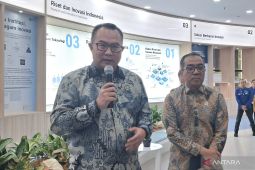
Speaking at the launch of the Indonesian Innovation House (Rumah Inovasi Indonesia/RII) in Jakarta on Tuesday, BRIN Head Arif Satria said satellite research falls under “Quadrant II,” a category characterized by high importance and high performance for the Indonesian public.
“We are developing satellites that are vital for disaster management, as well as for monitoring oceans, food security, and other areas,” he said.
Satria noted that BRIN is also prioritizing research in the fourth quadrant, which covers simpler technologies that can deliver substantial benefits.
“Some have asked, ‘Why is BRIN focusing on simple technologies?’ It is not just about simplicity; it is about impact. Therefore, both the second and fourth quadrants are our priorities,” he said.
Satria added that, following a directive from President Prabowo Subianto, BRIN was also focusing on developing a malaria vaccine, which he said does not yet exist anywhere in the world.
The effort is particularly urgent, as data from the Health Ministry show that approximately 95 percent of Indonesia’s 674,046 malaria cases are concentrated in Papua.
“We have been tasked by the President with accelerating the development of a malaria vaccine, something that does not currently exist anywhere in the world. This mission requires highly advanced technology to develop a vaccine within a short timeframe,” Satria said.
He said that while vaccine development typically takes five years, BRIN aims to shorten the process to just two years.
BRIN also hopes to see universities conduct more research into semiconductor technology, particularly by exploring the potential of Indonesia’s abundant mineral resources.
“I would like to see research on semiconductors being conducted at universities as well. Essentially, this requires a regulatory framework that is crucial for discovering new materials that serve as the building blocks for semiconductors,” he said.
Related news: Indonesia must focus on tech, human resources for growth, BRIN says
Related news: Indonesia aims to predict forest fires up to six months ahead
Translator: Lintang Budiyanti Prameswari, Cindy Frishanti Octa
Editor: M Razi Rahman
Copyright © ANTARA 2026