


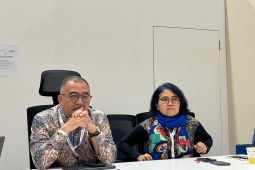
Antalya, Turkey (ANTARA) – The Ministry of Environment said carbon trading transactions reflect the progress of Indonesia’s efforts to curb greenhouse gas (GHG) emissions.
The ministry’s Deputy for Climate Change Control and Carbon Economic Value Management, Ary Sudijanto, explained that carbon trading not only creates economic value from emission reductions but also validates a country’s progress in cutting emissions through recognition from other parties.
“If we look at our report, for example, it records verified emission reductions, which can then be sold in the form of carbon units,” Ary said in a media briefing on the sidelines of the UN Climate Change Conference (COP31) in Antalya, Turkey, on Saturday (November 14).
He explained that carbon trading is subject to strict requirements. The methodology used to calculate emission reductions must be validated by an independent institution, while the resulting reductions must undergo verification to ensure their actual achievement.
Ary said the mechanism gives carbon buyers confidence that the carbon units they purchase correspond to actual emission reductions.
According to him, Indonesia’s ability to sell carbon units in the international market would not only generate revenue for domestic emission reduction projects but also recognize the achievements of Indonesian green project developers in reducing emissions.
However, he noted that the main goal of carbon trading is not merely to create new economic sources, but also to support the financing of various climate actions.
He cited the example of mangrove rehabilitation efforts, which require funding from seedling provision, planting, and maintenance.
The initiative could also bring economic benefits to surrounding communities, as improved mangrove ecosystems can support the growth of fish populations and other aquatic species, he continued.
“Carbon trading is not primarily about creating a new economy, but about funding climate action. When climate initiatives generate wider benefits, as with mangrove restoration, the benefits also reach those who grow the seedlings, plant them, and maintain the mangroves,” Ary pointed out.
He then mentioned that the main benefit of carbon trading lies in supporting long-term climate action, while economic gains are an added benefit.
Ary compared carbon trading to a test of a country’s success in reducing emissions, where countries cannot simply claim to have reduced emissions successfully but need external recognition and verification.
“Climate action is like a test. We cannot simply claim that we have done well. Others must also recognize our achievements, and carbon buyers provide that recognition,” he remarked.
Related news: Indonesia launches provincial forestry carbon trading at COP31
Related news: Indonesia urges regional enterprises to tap carbon market
Related news: Indonesia seeks greater community benefits from carbon trading
Translator: Sanya Dinda S, Resinta Sulistiyandari
Editor: Azis Kurmala
Copyright © ANTARA 2026