


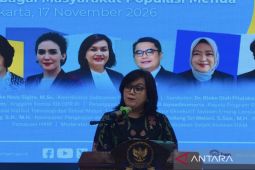
Jakarta (ANTARA) – The National Commission on Human Rights (Komnas HAM) called for changes to elderly protection policies, so that older people would not merely social aid recipients but also recognized as rights holders with dignity equal to other citizens.
“Growing old with dignity is a human right. A nation can be judged by how it treats vulnerable groups,” Komnas HAM Coordinator for Assessment and Research Subcommission, Atnike Nova Sigiro, said here on Tuesday.
Sigiro made the statement at the public discussion and launch of the baseline study on human rights policy review for the elderly. The rising elderly population must be followed by policies ensuring they can live safe, prosperous, independent, and dignified lives.
According to her, rising life expectancy should not be seen merely as a demographic development success. The state must also ensure that population aging is followed by fulfillment of basic rights, including access to work, public services, and social welfare.
Related news: Komnas HAM urges synergy to fight online scam-linked trafficking
Based on the 2023 Statistics Indonesia (BPS) projections, people aged 60 and above made up 9.93 percent of the population in 2020, or about 26.78 million, and the share is expected to exceed 20 percent by 2050.
Sigiro assessed the demographic shift demands greater state responsibility in preventing neglect of and discrimination against the elderly. Without adequate protection policies, a rising elderly population could deepen their vulnerability in accessing basic rights.
The protection challenge is also linked to the absence of binding international human rights instruments specifically regulating the rights of the elderly.
Even the International Covenant on Economic, Social, and Cultural Rights does not specifically regulate the various forms of vulnerability experienced by this group, Sigiro pointed out.
Related news: Indonesia’s rights commission calls for protection for fire victims
Meanwhile, the available international instruments still rest on non-binding, voluntary legal principles; so strong and measurable protection of the elderly’s rights remains a challenge.
Through the launch of the baseline study, Komnas HAM seeks to map elderly protection policies and identify various challenges in fulfilling their rights in Indonesia.
The study is expected to become a basis for more inclusive and sustainable policy improvements so the elderly keep access to rights, opportunities, protection, and space to take part in community life.
Related news: Komnas HAM pushes right-to-food principles in food programs
Translator: Devi, Kenzu
Editor: Fransiska Ninditya
Copyright © ANTARA 2026