


Jakarta (ANTARA) – The Indonesian government is preparing post-quantum cryptography (PQC) technology to safeguard digital data security against emerging threats posed by quantum computing.
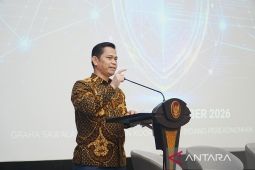
Ali Murtopo Simbolon, Deputy for Commerce and Digital Economy Coordination at the Coordinating Ministry for Economic Affairs, stated that proactive measures are vital to protect sensitive information amid rapid digital economic expansion.
The initiative was highlighted during the “Strategizing Indonesia’s Digital Defense in the Quantum Era” workshop in Jakarta on Thursday, Oct. 15.
Authorities aim to counter risks such as “Harvest Now, Decrypt Later” (HNDL), wherein bad actors harvest encrypted data today for decryption once advanced quantum computers become operational.
Simbolon explained that government agencies and industry stakeholders must map vulnerable systems to deploy robust cryptographic defenses ahead of future quantum threats.
Implementing PQC requires comprehensive planning, system mapping, workforce upskilling, and cross-sector coordination rather than simple algorithm replacements.
Such safeguards are essential given the scale of Indonesia’s digital market.
Indonesia’s digital economy gross merchandise value (GMV) approached US$100 billion in 2025, marking a 14 percent year-on-year increase with projections reaching US$340 billion by 2030.
Meanwhile, Bank Indonesia (BI) recorded 12.99 billion digital payment transactions in the third quarter of 2025, representing a 38.08 percent year-on-year surge.
Simbolon stressed that cybersecurity remains foundational to maintaining consumer trust and supporting advanced technology adoption.
Strengthening security forms a core pillar of the National Digital Economy Development Strategy White Paper.
Simbolon also emphasized building national technological self-reliance to avoid over-reliance on foreign cybersecurity frameworks.
“We can certainly learn from those who are ahead, but we must also build self-reliance in developing our own cybersecurity platforms,” Simbolon remarked.
Beyond domestic defense, Indonesia is fostering international artificial intelligence (AI) partnerships with global players, including the United States and China, to accelerate technological innovation.
At the regional level, Jakarta is championing the ASEAN Digital Economy Framework Agreement (DEFA), slated for signing in November.
DEFA is projected to double the regional digital economy’s value from US$1 trillion to US$2 trillion upon full implementation.
Related news: Indonesia leverages AI in downstreaming to target 8 percent growth
Related news: Indonesia strengthens AI use in event tourism, MICE sector
Translator: Bayu Saputra, Raka Adji
Editor: Arie Novarina
Copyright © ANTARA 2026