


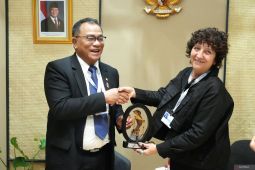
Jakarta (ANTARA) – Environment Minister Moh. Jumhur Hidayat outlined Indonesia’s measures to reduce methane emissions from waste management at the 31st Conference of the Parties (COP31) in Antalya, Türkiye.
He raised the issue during a bilateral meeting with Climate and Clean Air Coalition (CCAC) Secretariat Head Martina Otto on Wednesday (Nov. 11), according to a statement received in Jakarta on Friday.
Their discussion covered the need to address open dumping practices in Indonesia and develop technologies to capture methane gas and convert it into renewable energy.
Jumhur noted that cross-sector collaboration on methane mitigation could pave the way for private investment and funding through global carbon markets.
“Improving waste management is not just a matter of environmental services; it also represents a significant climate mitigation opportunity that warrants accelerated action, investment, and technical support,” he said.
The Environment Ministry said in the statement that Indonesia seeks to use its COP31 participation to reaffirm its commitment to implementing measurable green projects that deliver tangible benefits to communities.
It noted that Indonesia’s methane emissions strategy rests on two core measures: reducing organic waste through prevention and sorting at the source and optimizing landfill gas utilization.
These measures entail developing composting facilities and biodigesters, as well as establishing transparent monitoring, reporting, and verification (MRV) systems.
As one of the first seven countries receiving support under the Super Pollutant Country Action Accelerator initiative, Indonesia is committed to strengthening collaboration with global partners such as CCAC.
The country seeks to translate this collaboration into integrated waste facilities in selected cities, landfill modernization, and technical assistance for landfill management overhauls and methane-to-energy conversion.
Equally important is strengthening MRV data by establishing a reliable emissions baseline to ensure transparency in reporting emissions reduction achievements.
The ministry further stated that Indonesia also aims to use COP31 to share best practices and serve as a model for other developing countries in balancing environmental sustainability and economic growth in addressing super pollutants.
Related news: Indonesia targets full waste management by 2029, ends open dumping
Related news: Turning power plant waste into fish houses, a new hope for fishermen
Related news: Indonesia to highlight climate bills at COP31 summit in Turkiye
Translator: L.B. Prameswari, Tegar Nurfitra
Editor: Azis Kurmala
Copyright © ANTARA 2026