


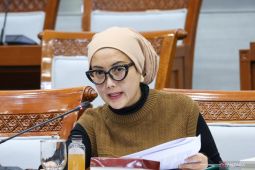
Jakarta (ANTARA) – An Indonesian lawmaker has urged the government to review value-added tax (VAT) on menstrual products, particularly sanitary pads, citing affordability and women’s reproductive health needs.
Selly Andriany Gantina, a member of the House of Representatives’ Commission VIII, said here Tuesday that the government should consider exempting menstrual products from VAT or covering the tax through state subsidies.
“Menstruation is neither a choice nor a lifestyle or a discretionary expense that can be postponed. It is a biological process that women cannot avoid,” Selly said.
She said tax policies should consider their impact on groups with different needs and socioeconomic circumstances, rather than applying uniform rules without assessing the consequences.
“The issue is not simply whether the tax specifically targets women. The more fundamental question is who actually bears its burden,” she said.
Selly said low-income women were particularly vulnerable to higher menstrual product costs because these items were recurring and unavoidable necessities.
She also cited recommendations from the National Commission on Violence Against Women (Komnas Perempuan), which urged the government to reconsider VAT on menstrual products.
The commission said the current tax policy did not adequately account for women’s specific needs in exercising their reproductive health rights.
Selly called for stronger gender considerations in fiscal policy, saying taxation should be assessed not only by its revenue potential but also by its impact on women’s basic needs and quality of life.
She also urged the government to ensure vulnerable groups, including women from low-income households, informal workers, people with disabilities and schoolgirls, could access adequate menstrual products.
These efforts should be integrated with access to sanitation facilities, clean water, reproductive health services and menstrual health education.
Selly urged the Ministry of Women’s Empowerment and Child Protection to strengthen coordination with the Finance Ministry and other relevant agencies to incorporate women’s needs into national policymaking.
She stressed that state revenue remained essential to financing development and public services, but fiscal policy must also uphold social justice and address the needs of vulnerable groups.
Related news: Commission calls for VAT exemption on menstrual products in Indonesia
Translator: Tri Meilani A, Fauzul Azhim Bin Fakhrurazi
Editor: Rahmad Nasution
Copyright © ANTARA 2026