


The technology could also be used to map the seabed contours of the archipelago.
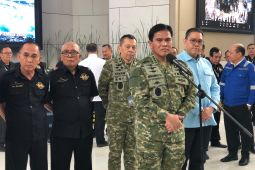
Jakarta (ANTARA) – Indonesian Navy Chief of Staff Admiral Muhammad Ali has outlined plans to collaborate with the domestic defense industry to develop underwater drones, aiming to bolster the nation’s maritime defense and surveillance capabilities.
“Underwater technology is advancing rapidly. The Indonesian Navy continues to study ways to utilize underwater drones to support surveillance and reconnaissance operations in our maritime territory,” Ali said here on Wednesday (September 9).
According to the Navy chief, underwater drones are highly effective for monitoring purposes as they can easily navigate the narrow straits within Indonesia’s strategic waters, including the Indonesian Archipelagic Sea Lanes (ALKI), which connect the Indian and Pacific Oceans.
Ali noted that their extended cruising range would enable the drones to detect foreign vessel movements and anticipate illegal entries into Indonesian waters. The technology could also be used to map the seabed contours of the archipelago.
By obtaining accurate marine data, the Navy aims to create detailed underwater maps showing ocean currents, tidal patterns, and seabed conditions, including coral reefs and shipwrecks.
These operations, Ali added, can be conducted without the high costs associated with deploying manned surface ships while also ensuring personnel safety.
Meanwhile, Alman Helvas Ali, a defense analyst from Marapi Consulting, emphasized in a recent press release that the government must thoroughly understand the complex characteristics of Indonesian waters before expanding its maritime defense infrastructure.
“In the western region, our seas tend to be shallow, whereas the eastern region consists of deep waters. Each region has different water density, salinity, and temperatures,” he explained.
He noted that this oceanographic data must be continuously updated to allow the Navy to maximize the effectiveness of its primary weapons systems, such as submarines and surface ships.
However, the analyst acknowledged that the Navy and domestic industries do not yet possess the specialized technology required to optimally support advanced underwater mapping operations.
He suggested that the Navy consider collaborating with global defense industry players. Beyond providing a faster procurement option, such international partnerships could also help enhance the technological capabilities of Indonesia’s domestic defense sector.
Related news: Indonesian Navy joins SAR operation for journalists near Anak Krakatau
Related news: Indonesian Navy to deploy Garibaldi carrier for forest fire mitigation
Related news: Multinational marines conduct urban warfare skills in SGS 2026
Translator: Walda Marison, Uyu Liman
Editor: M Razi Rahman
Copyright © ANTARA 2026