


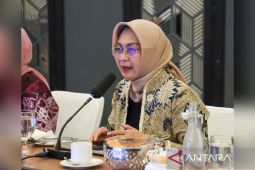
Jakarta (ANTARA) – The Indonesian Ministry of Women’s Empowerment and Child Protection is pushing to strengthen rural women’s role and leadership in tackling climate change by boosting food security, managing natural resources, and driving gender-responsive climate action.
“Rural women are key pillars in maintaining food security, managing natural resources, and building community resilience against climate change,” the ministry’s Deputy for Gender Equality, Amurwani Dwi Lestariningsih, said in Jakarta on Friday.
Her statement came in response to the commemoration of the International Day of Rural Women.
Amurwani emphasized the need to ensure rural women have equal access and opportunities to actively participate in building sustainable and equitable development.
However, women continue to face a disproportionate burden from climate change – ranging from droughts, floods, and crop failures to limited access to land, technology, climate information, financing, and productive resources.
She noted that these challenges highlight the importance of integrating a gender perspective into all climate action policies and programs.
Limited access to productive resources can affect rural women’s ability to sustain their livelihoods, support household food security, and adapt to climate change.
Therefore, women’s needs, experiences, and vulnerabilities must be taken into account when designing and implementing policies to ensure the benefits of these programs are shared fairly and inclusively.
“A gender perspective must be an integral part of every policy and climate action program so that the needs, experiences, and vulnerabilities of women are addressed fairly and inclusively,” Amurwani remarked.
She added that rural women are not only among those most affected by climate change, but are also agents of change with immense potential to drive sustainable solutions.
Through gender mainstreaming and a Gender Equality, Disability, and Social Inclusion (GEDSI) approach, women must be given equal opportunities to participate in decision-making, access climate finance, develop climate-smart agriculture, and lead innovation and green economic development at the community level.
“Let us work jointly to strengthen the capacity, leadership, and independence of rural women, because equitable climate resilience cannot be achieved without gender equality and women’s empowerment,” she said.
Related news: Deputy Minister Tan endorses women’s role in rural development
Related news: Indonesia pushes climate resilience to protect village livelihoods
Translator: Anita Permata, Raka Adji
Editor: Primayanti
Copyright © ANTARA 2026