


Jakarta (ANTARA) –
The Ministry of Health awarded 4,592 scholarships between 2024 and 2026 to specialist doctors, general practitioners, dentists, and other healthcare workers to accelerate the equal distribution of health personnel nationwide.
Health Minister Budi Gunadi Sadikin on Friday said that fulfilling the need for healthcare human resources remains a challenge in strengthening the national health system.
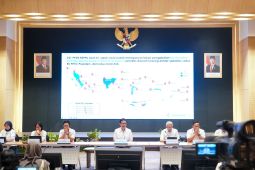
Data from the Health Human Resources Information System (SISDMK) as of October 21, 2026, showed that 93 percent of regions are facing a shortage of specialist doctors, with a total shortfall of 55,192.
“Our main challenge is the shortage of specialist doctors. Of the 66 regional hospitals being built under the Quick-Win Program, only 51 percent have a full complement of specialists. The Ministry of Health is working to address this gap,” Sadikin noted.
He outlined that the scholarships consist of 2,696 specialist doctor scholarships, 1,081 general practitioner and dentist scholarships, and 815 health worker scholarships.
The ministry is also taking other measures to accelerate the supply and distribution of specialist doctors, such as through hospital-based specialist medical education, the deployment of medical and healthcare personnel, and advanced training at home and abroad.
Sadikin explained that the Hospital-Based Primary Provider Teaching Hospital (RSPPU) program is designed to speed up specialist doctor training while ensuring medical education meets healthcare needs in regional areas.
Since 2024, the RSPPU program has enrolled 221 trainees across four cohorts. In 2026, the Ministry of Health also developed 55 specialist medical education programs at 52 hospitals to meet the need for seven basic specialties and services for cancer, heart disease, stroke, uronephrology, and maternal and child health (KJSU-KIA).
To maintain educational quality, Sadikin said that six RSPPU have received accreditation as educational institutions from the Accreditation Council for Graduate Medical Education (ACGME) and the Indonesian Independent Accreditation Institute for Higher Education in Health (LAM-PTKes).
The ministry also assigns specialist doctors to priority hospitals to fill service gaps. These assignments include hospitals in the Quick Win Program, KJSU-KIA services, and hospitals in underdeveloped, frontier, and outermost (3T) areas.
“As of July 2026, 371 specialist doctors have been assigned to strengthen services at priority hospitals,” the minister explained.
He noted that these assignments are considered essential, given that specialist medical training takes several years, while regional healthcare needs require immediate attention.
In addition to specialist doctors, the ministry deploys medical and other healthcare personnel to community health centers (Puskesmas) in areas facing staff shortages through a special assignment program.
As of July 2026, the program had deployed 3,648 healthcare workers to strengthen services in underserved areas.
The ministry is also enhancing specialist doctors’ competencies through overseas fellowship programs, focusing on cardiac and stroke care and the use of advanced medical technologies.
A total of 136 specialist doctors have participated in training in China, South Korea, Japan, and Malaysia. Of these, 65 have graduated and returned to their home regions.
“This effort aims to strengthen services in various healthcare facilities and help meet community needs more optimally,” Sadikin stated.
Related news: Govt launches 25 new specialist doctors programs to curb shortage
Related news: Hospital-based program aims to fix Indonesia’s specialist shortage
Related news: Indonesia to open 150 residency programs to ease specialist shortages
Translator: Mecca Yumna N P, Resinta Sulistiyandari
Editor: Azis Kurmala
Copyright © ANTARA 2026