


Jakarta (ANTARA) –
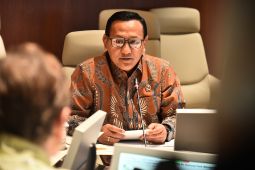
Indonesia’s production and protected forests play a strategic role in promoting sustainable forest management, achieving the country’s FOLU Net Sink 2030 target, and improving public welfare, Deputy Forestry Minister Rohmat Marzuki said.
“Production and protected forests not only support ecological balance but also provide livelihoods for millions of people. Therefore, their management must be carefully planned, measurable, and deliver tangible benefits for the environment, the economy, and society,” he said on Friday.
The ministry’s Directorate General of Sustainable Forest Management, with support from the Multistakeholder Forestry Program (MFP) Phase 5, has prepared the National Investment Plan for Production and Protected Forests 2026–2030.
Indonesia has a national forest estate of more than 120 million hectares. Of this area, 66.7 million hectares, or 57 percent, are classified as production forests, while 29.1 million hectares, or 25 percent, are protected forests.
Marzuki added that the national deforestation rate had declined from 462,000 hectares in 2019 to 175,000 hectares in 2024.
Meanwhile, forest and land rehabilitation reached 217,974 hectares in 2024, against a broader target of rehabilitating 12 million hectares of degraded land.
According to Marzuki, the National Investment Plan is designed to translate national policies and frameworks, including Indonesia’s Nationally Determined Contribution (NDC), the National Forestry Plan (RKTN), and the FOLU Net Sink 2030 target, into concrete actions with measurable results.
He outlined four main objectives of the plan namely identifying priority interventions, estimating funding needs and expected carbon benefits, mapping stakeholders’ roles, and preparing a portfolio of programs ready for implementation.
In production forests, the plan aims to ensure supplies of industrial raw materials, promote diversified forestry businesses, and support the transition to renewable energy.
In protected forests, the focus is on optimizing environmental and carbon services, protecting watersheds, and establishing sustainable sources of conservation funding.
The expected impact by 2030 rests on three pillars: Planet, Prosperity, and People.
From an environmental perspective, the forestry sector is targeted to achieve net emissions of minus 140 million tons of carbon dioxide equivalent (CO2e).
Economically, the plan seeks to increase the value of forestry exports from the 2022 baseline of US$12.6 billion.
In terms of community benefits, the social forestry area is targeted to expand from 8.1 million hectares to 12.7 million hectares, alongside efforts to strengthen village-based food and energy security and protect the rights of Indigenous communities.
“Communities must be the primary actors in protecting forests while also receiving direct benefits through social forestry, village forests, and agroforestry,” Marzuki emphasized.
Related news: Indonesia taps local wisdom for forest emissions goals
Related news: Social forestry proposed to become National Strategic Project
Translator: Arnidhya Nur Z, Resinta Sulistiyandari
Editor: Primayanti
Copyright © ANTARA 2026