


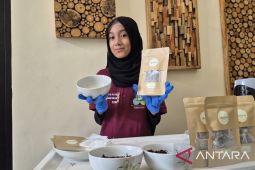
Surabaya, East Java (ANTARA) – A seventh-grade student in Surabaya has developed 31 aloe vera-based products, ranging from food and drinks to health and beauty items, and begun marketing them locally.
“I have developed health products, food, drinks and cosmetics. The food and health products, in particular, are truly useful,” Nayla said in Surabaya, the capital of East Java Province, on Saturday.
Born on November 27, 2013, and now in seventh grade, Nayla began developing aloe vera products in sixth grade after researching the plant’s benefits and potential uses.
Her food and drink products include aloe vera melon ice, candied aloe vera, crackers, candy and herbal tea.
One product is herbal tea made from aloe vera peel, tea leaves and dried roselle. She first harvests the leaves, separates the peel from the pulp, washes it and dries it.
Once dry, she blends the aloe vera peel and mixes it with tea leaves and dried roselle before placing the mixture in tea bags.
A package costs 8,000 rupiah (about 44 US cents) and contains five tea bags, she said.
Her cosmetic range includes shampoo, liquid soap, conditioner, hair tonic, body lotion, bar soap, face masks, sunscreen, moisturizer and facial mist.
Nayla sells her products through her school, local Family Welfare Movement (PKK) groups and Jalasenastri. Sales have generated more than 2 million rupiah (about US$110).
She has received guidance from her parents, Reni Puspitasari and Oki Tristanto, as well as Airlangga University students who helped research product development.
While in elementary school, she won first place in Surabaya and nationally in a Social Affairs Ministry competition for herbal-product innovation.
Nayla hopes her work will inspire young people to care for the environment and make better use of natural resources around them.
“I hope young people and Indonesians will become more committed to protecting the environment and keeping the country greener and more beautiful,” she said.
Her mother, Reni Puspitasari, said she supported Nayla by encouraging her and expanding her knowledge of aloe vera’s benefits and processing methods.
“As a parent, I try to support and motivate her. Sometimes she gets tired from her busy daily schedule, so I encourage her to read about aloe vera,” Reni said.
Airlangga University students also help with research, while about five to seven homemakers and PKK members in Surabaya’s Sawahan Baru neighborhood participate in production, she said.
Residents help harvest the aloe vera, process and package the products, and distribute them, making use of plants grown in the neighborhood.
Reni said the products are sold at bazaars, PKK events, school exhibitions, salons and through resellers, with some customers returning to buy more.
Related news: Creative economy development can reduce youth unemployment: Minister
Related news: Deputy Minister urges regional governments to create spaces for youth
Translator: Willi I, Rahmad Nasution
Editor: Primayanti
Copyright © ANTARA 2026